
INTEGRATED VILLAGE DEVELOPMENT PROJECT
VICTAS SURYA RASHNI PROJECT –
VICTAS initiative falls in the row of national and international agendas to ascertain electricity for all. One of the varied objectives is to ensure electrification at affordable and negligible cost so that lower and middle-income group can afford electricity at ease. Our project “Surya Roshini” is an initiative to extend the benefits of safe, eco-friendly and cost-effective electricity to the rural community who’s long cherished dream is not yet fulfilled.
As a step towards livelihood improvement in the rural community, we have come up with our new project namely “SURYA ROSHINI”, which focuses on the need of electrifying the villages as an initiative towards rural empowerment. This project is based on solar lighting, the latest cost-effective eco-friendly technology.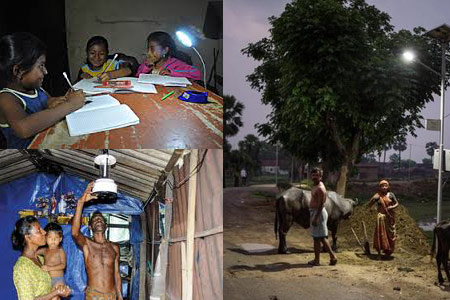
Project Details
The Problem
With the ever-increasing population, urbanization, and industrialization, the demand for electricity is increasing. It’s disheartening to state that in spite of 67 years of independence, India is still haunted by problems of electrification because of which the economic growth and overall development of the country is hindered.
The need for Rural Electrification
Integration of electricity services is an integral part of the Government of India Planning Commission’s vision for rural development which also is in tune with United Nation’s Millennium Development Goals. Electricity has been recognized as a key vehicle in achieving several development goals. Availability of electricity has a role to play in improving delivery of health and educational facilities, extending the benefits of communication facilities (telephones including mobile phones), improving the quality of community life and empowering women through their involvement in income generation.
Why Solar Energy?
Solar energy has been used since time immemorial either directly or indirectly and is vital to all living things. In addition to solar energy being a constant resource, heat and electricity are other forms of energy that can be made from solar energy. The key advantage of solar energy is that it is a free and unlimited source of energy. Solar energy is also the cleanest energy source that does not compromise or add to global warming.
Technology allows solar energy to be converted into electricity through photovoltaic devices and solar thermal heat. These methods utilize the sun without generating by-products or pollution that can contribute to global warming. As more progress is made in the means to generate and store natural solar energy, the problems with greenhouse gases due to man-made emissions can be significantly reduced. With increasing pollution, environmental threat is increasing too and solar energy is the need of the hour.
VICTAS’S initiative: Project SURYA ROSHINI
Victas Foundation’s project named “Surya Roshini” focuses on the need of electrifying the villages, using solar energy and in turn helps the country progress for the better.
Project Objective
The proposed project has been conceived to address crippling power shortage afflicting rural areas in India. It intends to generate emission-free power and at the same time improve rural lives. VICTAS Foundation in collaboration with its corporate partner aims to remove technical and financial barrier in the path of rural 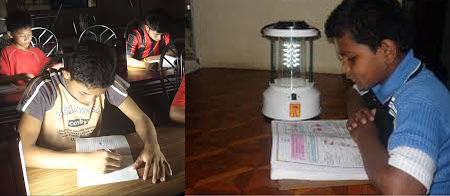 electrification. Using a simple cost-effective technology, solar energy will be harnessed to address the basic electricity requirement of the villages which in turn will act as a catalyst in socio-economic development.
Project Features
• Rural electrification through harnessing solar energy
• Upholding the vision of Government of India (In tune with Remote Village Electrification Programme)
• Private Sector involvement
• Addressing power need in a sustainability manner and community ownership
• Socio-economic development; poverty alleviation, women’s empowerment, improving health and education
• Community development
Project Components
The project will have two segments
Community Service Program (CSP): This will cater to the electricity requirement of the community in general. As a part of this programme, ten key points will be selected and a solar electricity generation point will be set up. For instance, important junctures in village pathways, community meeting places such as temples or health centers would be selected for installing electricity poles.
Domestic Service Program (DSP): This will cater to the electricity requirement at the household level. Solar electric lamps will be provided to selective households. A solar electric station will be set up at a convenient location for the purpose of recharging the batteries.
Key Benefits
The villages will benefit immensely from the projects both at the community level as well as at the household level. These benefits taken together will lead to a holistic development of the village. The following are the key advantages offered by the project:
Poverty Alleviation: Fossil fuels are not only becoming difficult to obtain but equally expensive. Harnessing solar energy is an easy and cost effective way to meet the power need in remote villages. The cost for charging solar lamp sets is extremely economical and helps the beneficiaries to curtail their power related expenses. At the same time the availability of power may enable villagers to work even after sunset. Prolonging work hours can have significant impact on income proliferation.
Women’s Empowerment: With lighting facilities, women can engage themselves in various home-based activities such as weaving. Again various women self help groups can hold evening meetings that would enable them to work during the day.
Improving Health Conditions: Besides being costly, fossil fuels emit harmful gases that impact the health of the users. It also leads to pollution and environmental degradation. Solar energy is not only cheap but produces no harmful emissions. Thus, its use ensures a healthy environment.
Improving Community Living: Additionally, street lighting will help the villagers to commute safely during night avoiding incidences such as snake bites. Again, in case of medical emergencies, it will be easier to take the patients to the health centers. Community meetings can be organized even after sunset. At the time of festivals, lack of electricity would not dampen the spirit of the celebrations.
Education: Availability of lighting facilities will enable the students at the villages to spend more time on their studies; during examination lack of power is a major issue that hinders students from preparing properly. This issue can be adequately taken care of with solar power.
Bridging the Gap: Most importantly, in providing the rural populace with electricity the partnering companies can exhibit their social responsibility towards rural development. Not only it will demonstrate the commitment of the corporate towards rural development it will also bridge the rural and urban divide. By reaching out to the rural masses, the corporate will take an essential; step in building an empowered India. Essentially, the beneficiaries and the sponsors would be united towards a common goal; creating a better tomorrow.