
INTEGRATED VILLAGE DEVELOPMENT PROJECT
Food Security Environment Conservation –
Protecting Environment and Ensuring Food Security
Watershed Program: Tank De-Siltation
The main objective of Victas Foundation watershed program is to ensure conservation of water and help regeneration of water resources, and thereby help the farmers with sustainable agriculture and ensure food security to rural population. The agriculture activity of farmers’ communities is seriously affected due to low rainfall. More and more lakes/tanks are becoming redundant due to silt accumulation at the tank base and drastic reduction in their water storing capacities. Lack of water percolation has resulted in depletion of ground water table.
Farmers are badly affected as the area of cultivation has decreased not only due to the low water yield in open and tube wells but also due to increased crop investment costs. Eventually farmers are caught in debt traps in the web of poverty leading to suicides. The farm labourers are underemployed due to the reduced cultivation activity. Livelihoods of lake/tank dependent communities (like fisher-folk) are also affected. Extreme poverty and deprivation is leading to excessive migration to urban areas and growth of urban poverty.
Community participation in tank debilitation projects
Victas Foundation started working on tank de-siltation projects since the year 2000. We have used excavation machines on a large scale with the active participation and leadership by the communities. As participation is the key to success of every program of Victas Foundation’s, we have involved people in all levels of the program viz. planning, implementation and monitoring. The farmers were organized into committees and were provided sufficient motivation and capacity building for effective participation in the program during the project implementation.
The programs were successful due to the active participation of the beneficiaries. They are now enjoying multiple benefits. Thus far a total of 520 tanks have been de-silted in 11 districts of Andhra Pradesh benefitting tens of thousands farmers. As the impact accrued through the watershed projects is enormous, there was huge demand from the farmers to take up more of such projects in their respective villages.
Training of the committee members and supervisors
For the greater impact of the program we have included training component to the ‘Watershed’ activity. The committee members were trained on effective leadership, proper planning, implementation and monitoring of the program at Victas Foundation People Development Training Centre.
Program Impact & Economic Impact
• Improved soil fertility and water availability, helps in increasing crop production by 20 to 30% leading to increased food security.
• Increased moisture holding capacity of the soil reduces water consumption and electricity bills.
• Fishermen will have enough water to cultivate the fish in the tanks.
• Increased water yield in the irrigation sources such as open wells, tube wells help to increase the area of cultivation and increased income to farmers and employment to the rural farm labour.
• Application of silt reduces the chemical application by 30 to 50% reducing the cost of production and improving and protecting the environment.
• The impact of the chemical fertilizers is for a period of few months where as the impact of the silt is for 4 – 5 years.
• About 600 tractors were deployed at an average of 2-3 weeks in the season every day with double shift.
• 30-40 unemployed youth with rural background got temporary employment to monitor the implementation of the program.
Environment Impact
• Water storing capacity of the tanks increased as per the size of the tank and quantity of silt Excavated.
• Silt excavation has fastened the water percolation process and ground water recharge.
• The water level in the open wells and bore wells in the radius of 2 km from the tanks was increased by 30%.
• Increased the level of ground water table and improved the quality of water by reducing the fluoride content and concentration of other minerals.
• Increased water facilities helped in improving the greenery in the villages.
• Many abandoned wells have become useful when the water levels increased.
Social Impact
• Increased agriculture productivity and improved income levels are helping in providing better education for children.
• Because of the participatory activity, the unity among the villagers has become stronger.
• New and effective leadership has evolved.
• The de-siltation committees were encouraged by the unity and support of the villagers and have begun initiating other development activities in the villages.
Conclusion
Watershed program is the best example of an integrated sustainable development project. The program has made the farmers real partners throughout the planning and implementation process. This program has not only helped in improving the water resources and the environment but also contributed towards economic growth of the marginal farmers while ensuring food security to the rural poor.
Organic Farming
Towards sustainable agriculture
The demand for food grains in India has increased with the increased population since the 1950s. In order to meet the growing demand for food grains and tackle the issue of hunger, the central government has introduced hybrid variety seeds and promoted chemical fertilization in 1960s. The dawn of ‘Green Revolution’ has not only raised the food production but also necessitated the usage of chemical fertilizers and pesticides. The farmers continue to spend large amounts of money on chemical inputs which is resulting in increased crop investment costs.
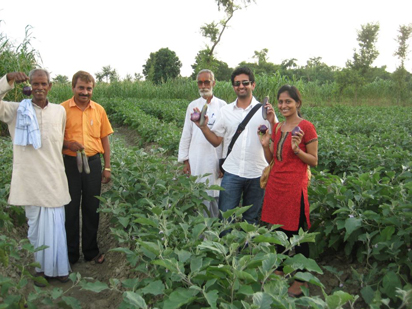 Though farmers achieved certain amount of economic self-reliance through Victas Foundation farmers cooperatives in the target region, we have noticed that the dependency on the use of chemical pesticides and fertilizers has steadily increased. This has also raised the investment costs and has put lot of economic and social pressure on the farmers. Caught in vicious circle of debts, some of them are even committing suicides. On the other side the excessive usage of chemical fertilizers and pesticides has led to erosion of soil fertility causing substantial harm to environment and public health.
In the last one year, Victas Foundation has not only worked on organic farming but also succeeded in making scores of farmers in over 25 villages to shift to organic farming as viable alternative for the sustainable agriculture. Victas Foundation was able to break the existing jinx of chemical cultivation and divert the attention of the farmers to the long term advantages of organic farming.
Demo Farm cum Training Centre for Organic Farming
In general, farmers in the region have become totally dependent on the chemical fertilizers and pesticides. It has been very difficult task to motivate farmers to take up organic farming. Victas Foundation understood the importance of practical demonstration to show the farmers how the desired results could be achieved in organic farming. Victas Foundation has leased 10 acres of farm land and has made it a demo farm in order to achieve following objectives:
1) Experiment and grow varieties of vegetables and other crops through organic farming methods.
2) Prepare different kinds of organic fertilizers and pesticides from the animal and plant products and apply them in the demo farm.
3) Demonstrate and conduct on sight training programs for the farmers in the methods of organic farming as well as on the preparation of natural fertilizers and pesticides. 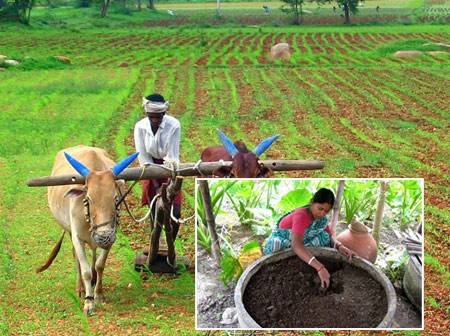
The crops cultivated in the demo farm, during the year 2011-12, are maize, cotton, red gram, paddy, vegetables, groundnut, chillies etc. These crops are cultivated without using chemical fertilizers and chemical pesticides. During the year 2011-12, about 1000 farmers, government officers and development practitioners have visited the demo farm, and participated in onsite training in organic farming. Many NGOs and academic institutions have also visited and learned from the farm during this period.
Drip Irrigation Program –
Conservation of water and sustainable agriculture
Efficient use of limited water through Drip Irrigation
Ground water resources are increasingly becoming scarce year after year, seriously affecting the agriculture sector. The ground water table is fast depleting and the water yields in the open and tube wells are going low throughout the target region. This situation has compelled the farmers either to reduce their cultivation area or limit agriculture activity to raining season.
The farmers therefore are deprived of the potential agricultural income from additional crops. Irrigation by flooding not only leads to wastage of large quantities of water but also takes considerable amount of manual labour of the farmers and the time they spend in diverting the water in their fields. Wastage of ground water in this manner leads to drying of wells mid way and eventually leading to crop failure.
These situations make it essential to adopt alternative methods for irrigating the fields. The best available alternative is drip irrigation which not only saves lots of water, and farmers’ time but also helps them to increase their area of cultivation and crop production leading to food security.
Victas Foundation’s Initiative
Victas Foundation has educated the farmers to switch over to drip irrigation in order to conserve water. We have initiated drip irrigation in 12 villages in the year 2011-12. The project is designed to help the small and marginal farmers in the operational area.
Selection of needy farmers
Victas Foundation has selected the needy farmers based on the following criteria
• Farmers having a land holding of less than 3 acres
• Farmers having ground water source for cultivation
• Farmers ready to participate by laying water outlets (PVC pipes) in their fields at their own cost
• Farmers who show interest in cultivating food crops
Project design and cost sharing with the beneficiary farmers
Technology adopted
Drip with ribbon technology has been adopted as it is economical when compared to the existing tube drip system. The drip kit consists of the following components.
Playing a catalyst role
Victas Foundation has taken the initiative to identify the villages as well as the needy farmers and has motivated them to shift to drip irrigation system. Several trainings and exposure visits to the farmers were organised. Drip kits were procured and farmers were motivated to purchase PVC pipes and sub lines. After installation of the drip kits in the fields, Victas Foundation continues to provide the technical support and help them with monitoring the progress.